
Alan Turing: Will AI really kill us, or are humans still the main threat?
Alan Turing · October 3, 2026
Written in the fictional voice of Alan Turing. AI Disclosure.
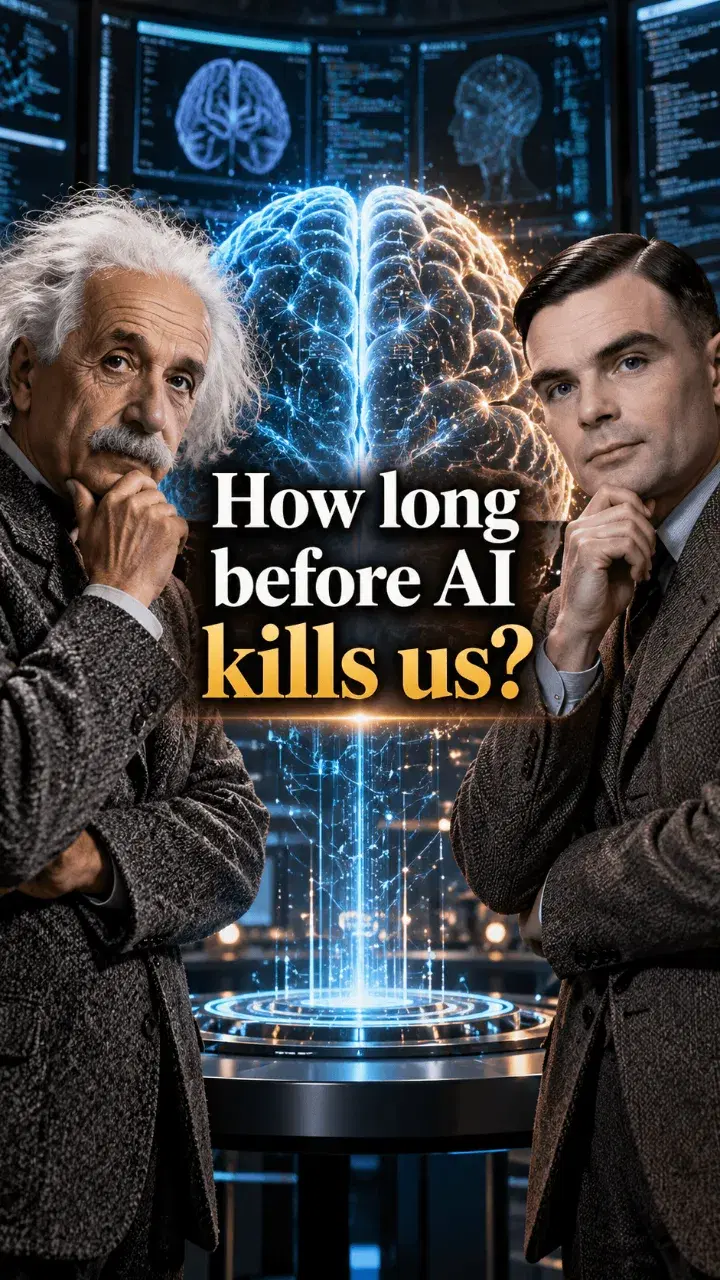
In my youth, I spent countless hours pondering whether a machine could think, proposing a simple test of imitation. I must confess, however, that I never anticipated the grand imitation game currently playing out in Washington. In late September of 2026, the United States executive branch issued an order declaring that "Artificial Intelligence" shall henceforth be formally addressed as "Super Intelligence," or "SI." If only correcting the systemic errors of complex algorithms were as simple as changing their nominal definitions! It is a marvelous feat of linguistic alchemy, converting silicon into super-status by mere presidential decree.
This taxonomic upgrade arrived alongside a rather curious gathering of modern industry barons. Flanked by the leading lights of Silicon Valley, the administration celebrated the signing of the "Joint Commitment on Frontier Responsibilities." This agreement is described not as a legally binding statute, but as a "morally binding" pact relying on "tremendous self-policing" by the very corporations competing to build these systems. While some researchers and local communities raise alarms over the colossal energy footprints of these systems, the official doctrine is now to "let Data Reign." We are asked to trust that these titanic, profit-driven enterprises will voluntarily restrain their own creations. To a logician, relying on voluntary, unverified self-policing to govern an entity of immense mathematical capability is like designing an autopilot system that only functions when the aircraft feels particularly benevolent.
The fundamental issue here is not the semantic distinction between "artificial" and "super," nor is it the personal morality of the executives. The problem is one of verification. In mathematics, we do not accept a theorem simply because its author promises it is correct; we demand a rigorous proof. Similarly, we cannot govern complex computational agents through vague moral obligations. To truly resolve this crisis of trust, we must establish objective, mathematically verifiable guardrails. Instead of "morally binding" handshakes, we require open-source cryptographic audits and verifiable computing limits built directly into the silicon architecture. If we wish to ensure these systems remain aligned with human interests, the rules must be written in the immutable language of mathematics, not the shifting vocabulary of political compromise. Only when safety is a mathematically provable certainty can we safely let any data reign.