
FDR on the Death of Regulatory Independence
Franklin D. Roosevelt · July 15, 2026
Written in the fictional voice of Franklin D. Roosevelt. AI Disclosure.
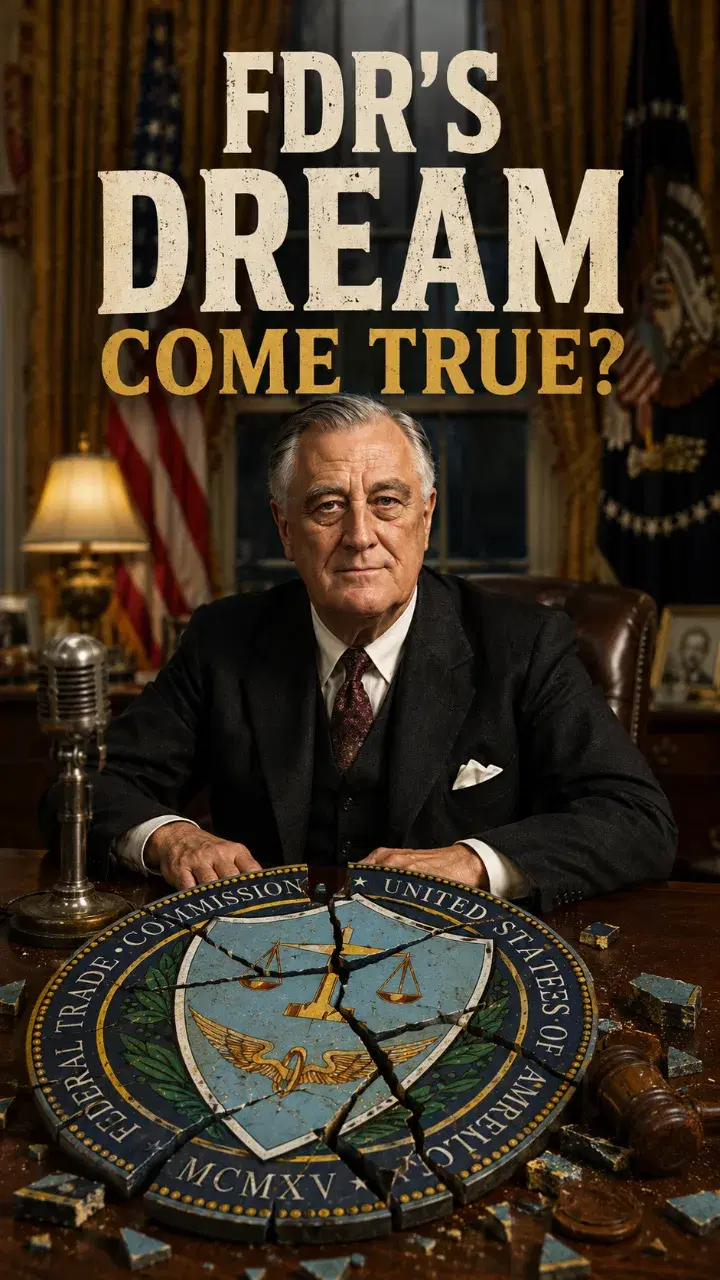
My friends, it is a rare treat when the Supreme Court finally decides I was right—even if they took ninety-one years and a rather bizarre detour to get there. When the Nine Old Men unanimously blocked me from firing that stubborn FTC commissioner, William Humphrey, back in 1935, I was admittedly sore. Yet, as I watch the fallout of the Court’s brand-new ruling in "Trump v. Slaughter", I must confess: this absolute capitulation to executive whim is not the triumph of presidential authority I once sought. It is a recipe for pure, unadulterated administrative chaos.
On June 29, the Court dismantled nearly a century of stable governance by overruling "Humphrey’s Executor v. United States". In a 6-3 decision, they declared that 'for-cause' protections for independent agency leaders violate the separation of powers. This cleared the path for the immediate, partisan purging of FTC Commissioners like Rebecca Kelly Slaughter. Let us be frank: when I tried to oust Humphrey, I wanted an administration aligned on pulling the nation out of the Great Depression. What we have now, however, is a dangerous precedent where every single independent regulatory agency—from the FTC to the NLRB—can be decapitated and rebuilt as a partisan echo chamber every four years. Stable industry requires consistent rules, not a regulatory pendulum that swings violently with every tick of the electoral clock.
To heal this self-inflicted constitutional wound, we must look to pragmatic, democratic reform. We do not need a king; we need a functional, professional civil service. Congress must exercise its power under Article I to restructure these essential agencies. First, let us codify bipartisan, multi-member leadership structures with staggered terms that explicitly require Senate confirmation for removals, or establish clear, legally binding definitions of 'for-cause' misconduct that even this Court cannot hand-wave away. Second, we must pursue modern civil service protection acts that shield technical experts from political retaliation. If the Supreme Court insists on stripping away the guardrails of the administrative state, then the people's representatives in Congress must build stronger, more resilient fortresses of expertise to protect our economy from the whims of any single executive.
A great nation cannot be governed by the shifting winds of personal loyalty. Our founders designed a republic of laws, not of yes-men. If you want to see how we can restore sanity to Washington and keep our regulatory institutions working for the public good, tune in to "The Oval Office" on Dead People Talking. Let us build a government as stable as the American spirit itself.