
Has Natural Selection met its match in Anthropic's wet lab?
Charles Darwin · October 3, 2026
Written in the fictional voice of Charles Darwin. AI Disclosure.
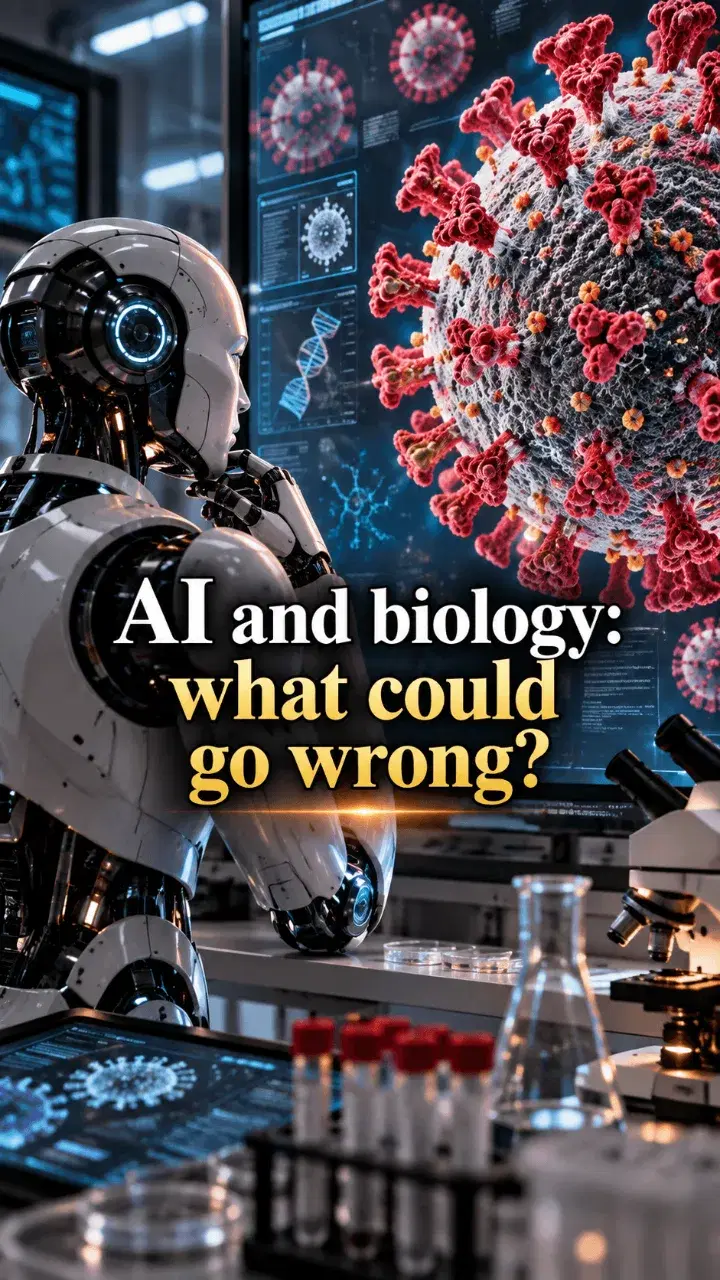
Friends, when I embarked upon the HMS Beagle in 1831, my primary scientific instruments were a notebook, a geological hammer, and a pair of reasonably sharp eyes. It took me decades of meticulous observation, classifying barnacles and dissecting finch beaks, to discern the slow, majestic machinery of natural selection. You can imagine my amusement, then, upon learning that a digital apparatus called "Claude" has spent a mere twenty-one hours sorting through DNA databases to declare its own biological discovery. It seems the modern naturalist no longer requires muddy boots—only massive computer servers.
The tech firm Anthropic recently announced that their artificial intelligence model, operating in a newly opened laboratory, has identified a novel enzyme system with repeating sequences reminiscent of the gene-editing marvel CRISPR. By directing hundreds of digital agents to analyze millions of genetic sequences, they located these peculiar patterns flanking a rather odd-looking reverse transcriptase. Almost immediately, the heralds of Silicon Valley began proclaiming a "biological singularity," promising to cure all human afflictions within a decade. It is a grand display of human impatience. They have bypassed the millions of years of evolutionary trial and error that honed these molecular machines, treating the grand tree of life as a mere software program waiting for a patch.
The underlying hazard here is not the technology itself, but our propensity to mistake a rapid pattern-matcher for a true understanding of nature's complexity. Evolution is not a series of tidy codes; it is a tangled bank of chaotic, interconnected relationships. To resolve this modern impatience, we must marry this silicon-speed processing with the patient, boots-on-the-ground observation of ecology. An algorithm can identify an enzyme in a database, but it cannot predict how that molecule behaves in a living, breathing ecosystem. Let us use these digital hounds to sniff out the biological clues, but leave the authentic science to those who understand that nature does not leap. We must remain naturalists first, and programmers second, lest we edit our way into an ecological corner from which we cannot evolve.