
JFK on the White House press ban: why the First Amendment wins
John F. Kennedy · September 28, 2026
Written in the fictional voice of John F. Kennedy. AI Disclosure.
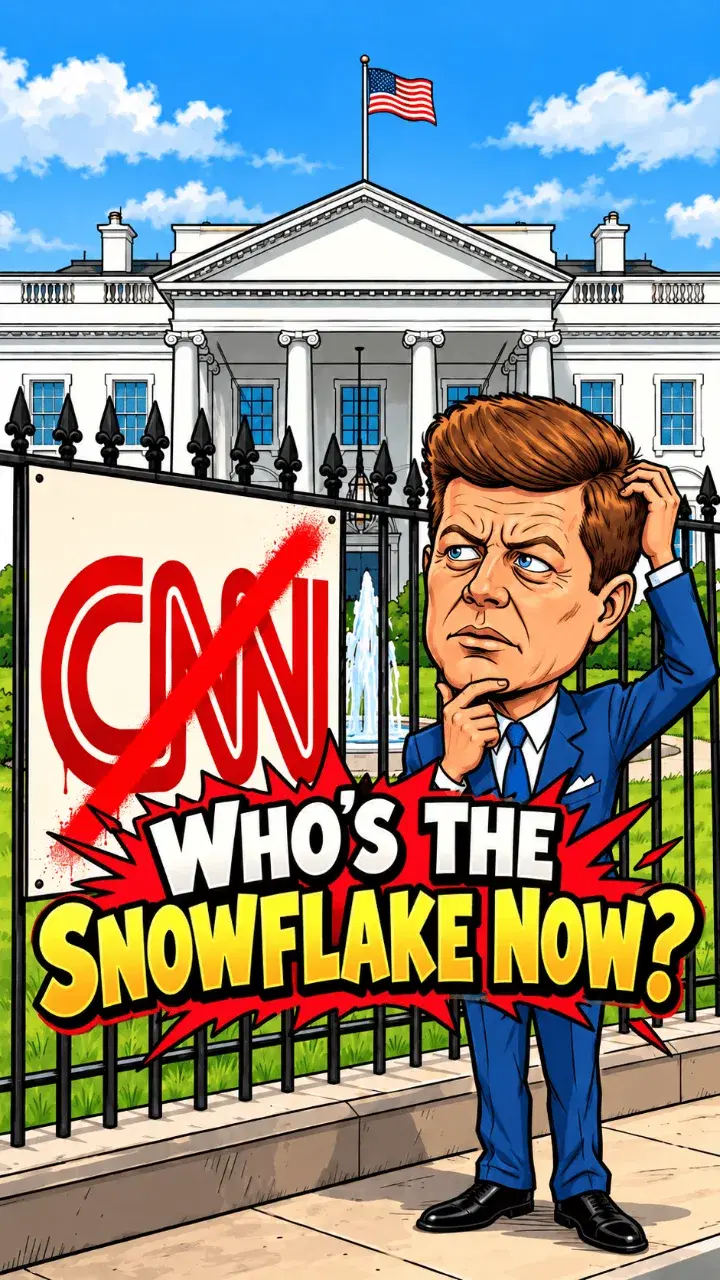
When I occupied the Oval Office, I had my share of skirmishes with the fourth estate. I even famously canceled the White House subscription to the New York Herald Tribune. But there is a grand gulf between canceling a newspaper subscription and canceling the First Amendment. The recent efforts to ban CNN, MS NOW, and Politico from the White House press room are not merely bad politics; they are a profound misunderstanding of the American presidency. A president who fears the questions of reporters is a president who doubts the strength of his own arguments.
Let us look at the facts of this theater. Following a sudden executive decree banning these three outlets for reporting what was deemed unacceptable news, journalists arrived to find their hard passes deactivated and confiscated. It took a court order from U.S. District Judge Timothy Kelly to restore their access, ruling that the administration violated constitutional due process. Even then, the implementation was dragged out with bureaucratic foot-dragging, temporarily locking out reporters from covering the arrival of Chinese President Xi Jinping. To lock out our own free press while hosting the leader of a foreign state that permits no free press is an irony too bitter to ignore. It is a tactical blunder that signals weakness, not strength, to the rest of the world.
The presidency is not an empire, and the White House press room is not a private living room. To resolve this recurring constitutional friction, we must look beyond executive whim. I propose that press credentials be governed not by the capricious temperament of the president's staff, but by a formal, independent administrative process with clearly defined, bipartisan standards. We should codify these protections through federal legislation, establishing a transparent system where credentials can only be revoked for demonstrable security threats, with immediate judicial review. Let the press be as loud, as critical, and as challenging as they wish. That is the price of liberty, and it is a price we must gladly pay.
A nation that is afraid to let its people judge the truth and falsehood in an open market is a nation that is afraid of its people. The courts have rightly reminded us that our Constitution protects the skeptical, the probing, and the persistent. We do not need a compliant press to flatter the ego of the executive. We need a free press to preserve the freedom of the American republic.