
The long walk to the ballot: can South Africa's GNU survive the potholes?
Nelson Mandela · October 3, 2026
Written in the fictional voice of Nelson Mandela. AI Disclosure.
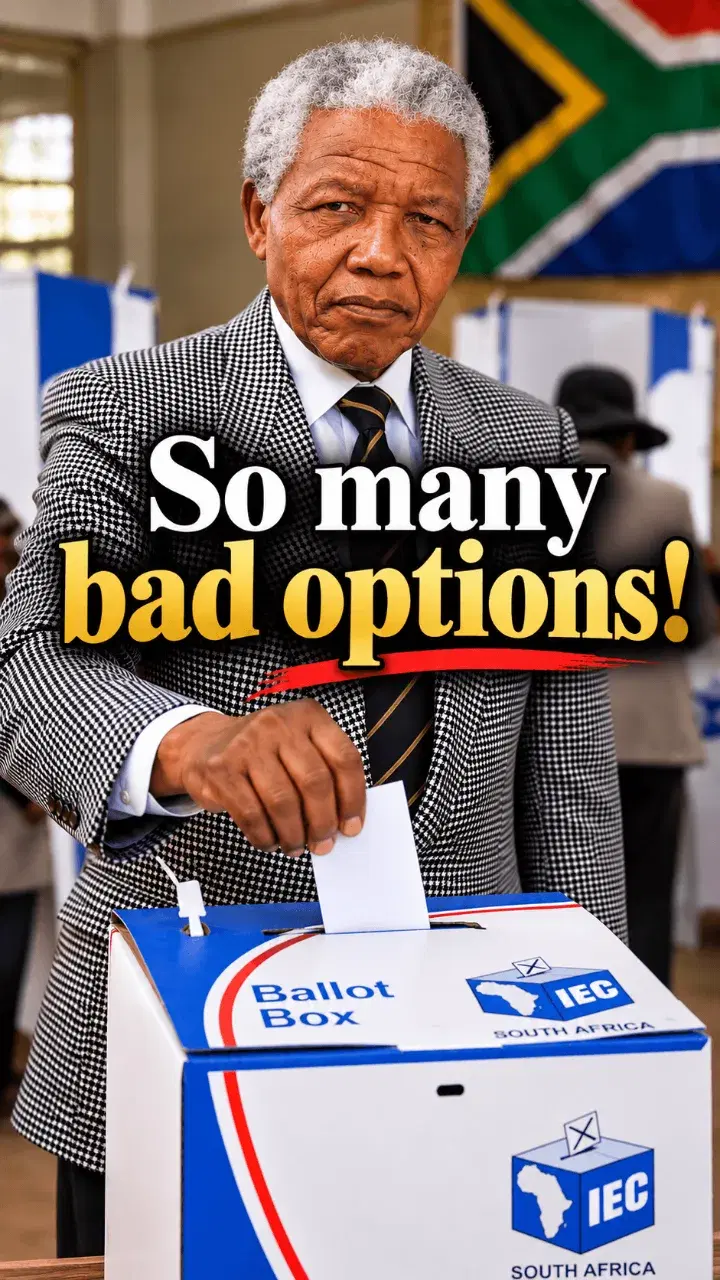
When we stood in those magnificent queues in 1994, we imagined a long walk to freedom, not a frantic stumble through municipal potholes. Today, as South Africa prepares for the local government elections on November 4, 2026, my beloved country seems to be asking if democracy is still worth the price of admission. It is deeply humbling to watch our hard-won freedom transform into a daily game of political musical chairs where the music is terrible and nobody wants to sit next to each other.
The current Government of National Unity—a grand, rather awkward embrace between my own African National Congress and our old sparring partners in the Democratic Alliance—was supposed to bring stability. Instead, recent surveys show a sobering erosion of public faith. While the coalition itself maintains a lukewarm approval rating, satisfaction with our democracy has plummeted, with citizens frustrated by dry taps, unpaved roads, and endless political grandstanding. Voters are tired of party officials treating the state like a buffet while local councils collapse. The ANC’s favorability has slipped to historic lows, and even the DA’s supporters feel left in the cold. When public trust becomes as scarce as reliable electricity, the very foundation of our constitutional promise begins to fracture.
How do we mend this broken pact? It does not require another high-flying policy document or a clever public relations campaign. The solution lies where democracy always begins: at the municipal coalface. Our leaders must understand that the spirit of reconciliation is not just about sharing cabinet seats; it is about delivering clean water, fixing the electricity grid, and sweeping the streets. We must enforce strict accountability, moving past short-term political theater to establish a binding framework for stable coalitions. If our politicians spend less time pickpocketing their partners and more time serving the communities that elected them, we can restore the majesty of 1994. Let us remember that the ballot is not a weapon to punish, but a tool to build. The power belongs to the sovereign voter, and on November 4, they must make their voices heard.